A Gap at the Gate
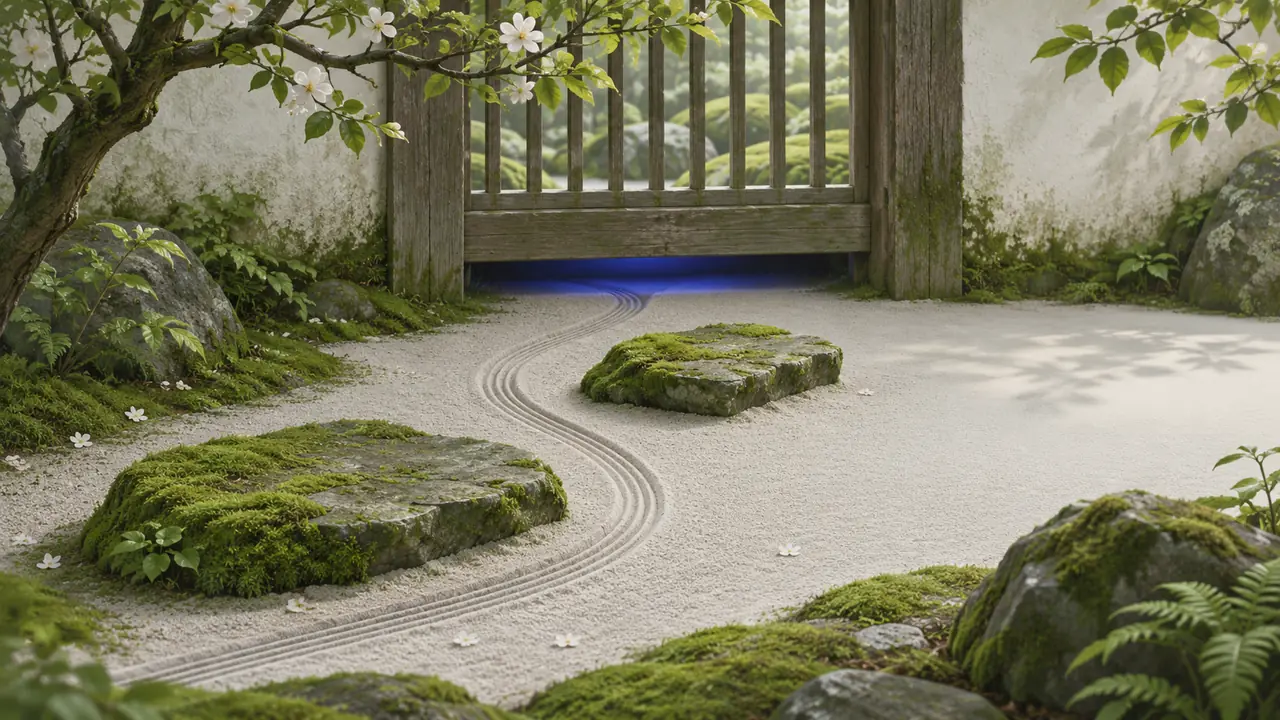
Two mossy stones stand beside the entrance to a shallow garden. Seen from the path, the gap between them looks like the rest of a straight threshold. From a lower place beside the bed it contains a small offset that leaves a better route through. The gardener can use a rake to compare those faces without turning every part of the opening into a new border.
Find an edge from the usual approach
A low plank continues up to the first stone. A gray shadow runs from one edge to the other as the gate moves farther over the bed. The first view suggests drawing through that shadow along the obvious path. One short line can record where the nearer edge appears to end. If it is carried all the way to the other stone, both sides start to look like the same surface.
The loop is to observe the border, make a small mark if it will help, move to a lower position and inspect the separation. A quiet space beside the stones lets the gardener compare the vertical edges. The old mark remains in the sand. You can find why it looked useful originally even after the offset makes it clear that the two stones need different approaches.
Use light without covering every quiet surface
The stones carry muted moss with dark blue at the shaded end. Pale sand remains around them. One plank supplies a clean edge under different light. The gate’s shifting shadow can make the opening look narrow without changing the actual stones. We make the first shadow readable and leave enough empty paper beside it to examine a little of the depth.
A gentle creak accompanies the gate movement. A separate scratch follows the rake when the gardener chooses to use it. The two actions can happen one after the other without requiring the player to hear them. On the lower view an edge from the raised stone sits in front of the gate. You can see which face is useful before deciding where to make another mark.
Leave space where the next view has work to do
The later test preserves the earlier line after you walk toward the gap. An untouched part of the sand remains around the lower stone. A partial groove from the first view gives you a reference on one side. The empty patch shows there is room to look again before extending the action. You can then draw a second, shorter mark behind the area you needed for inspection.
A Gap at the Gate is in prototype development. The current test covers the first threshold and the lower view near its offset. The Gate Gap describes the shadow before the new approach. The Space Left Open explains how a second mark can preserve a useful empty region. In the gate study you can keep that observation beside the wind trace. Both let a small part of the original bed remain visible.
The gardener can return to the old plank after inspecting the opening. Its edge is still visible when the shadow passes across the first line.