Garden Studies
Choose one of the observation images for the account below. The two studies describe different work done by an empty surface. The first uses room beside a groove to show the movement of wind. The second preserves a gap so the gardener can check why the nearby stones look aligned from one position.
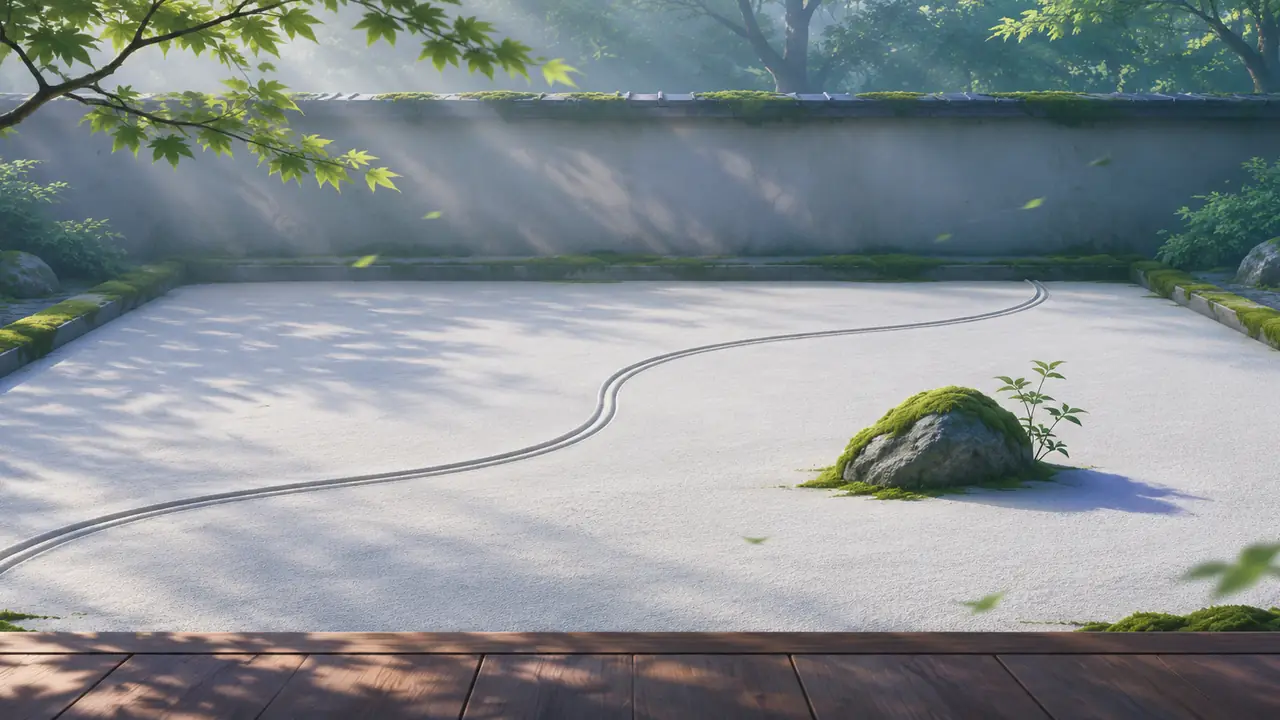 Read the groove
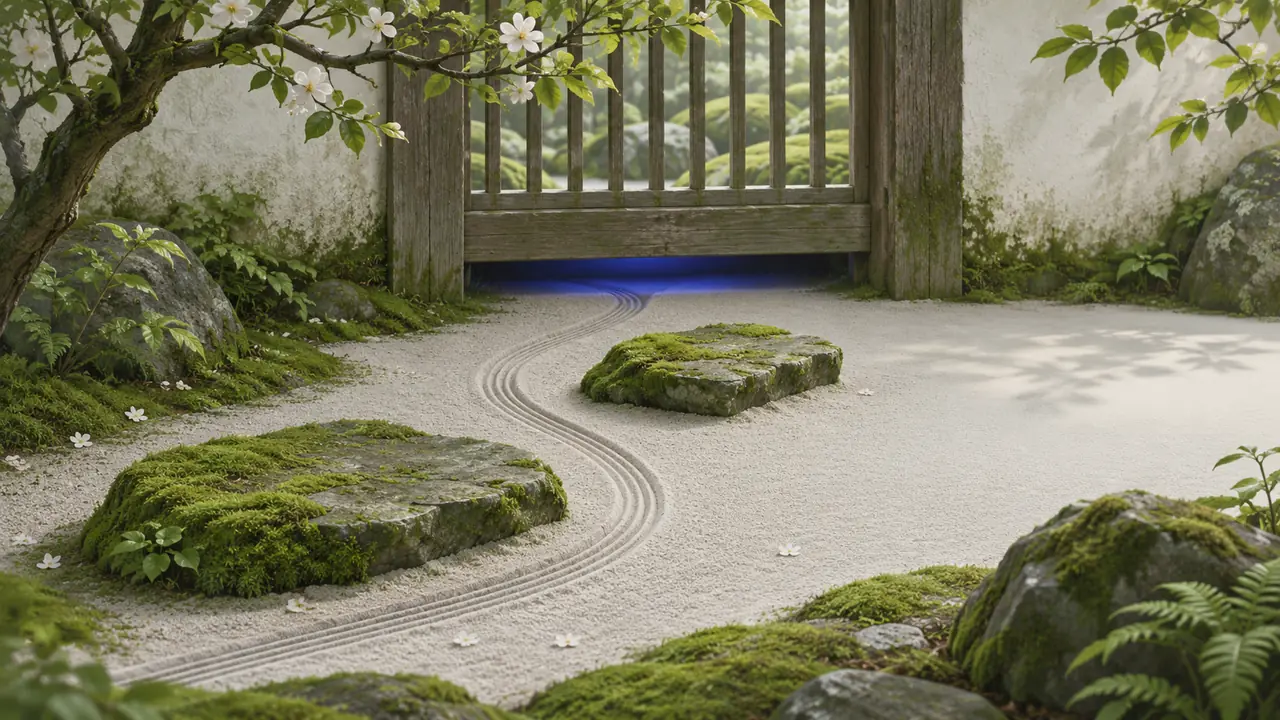 Read the gate gap
A groove that stops before the stone
The Unfinished Rake gives the gardener a short stretch of sand between a plank and a stone. The first mark can travel through much of that stretch. The end of the groove leaves a small region where the original sand remains visible. When a line of fine drift passes it, the player can compare its direction with the mark they made.
Save this detail to compare a small stroke with a cue that appeared while the rake was still. The nearby stone provides an earlier reference. It stands at the same angle while the sand begins to change at the edge of the groove. The gardener can use a new view to check the direction of the trace.
A gap that stays useful while the shadows move
A Gap at the Gate places the first visible line alongside stones at different heights. A short mark can extend one surface toward the edge of a shadow. Leaving part of the sand untouched prevents that line from making the opening look like a continuous curb. A lower position offers a second check before the gardener fills the region.
Keep the gate detail alongside the groove if you want to compare the benefit of leaving space in each project. One space shows what the wind left. The other reveals a difference in depth. The garden records follow later changes to both prototypes while preserving their original observations.
Both pictures remain available after the comparison is cleared.